DJ Equipment Technical Standards: Sound, Lighting and Safety Explained
Prices and booking
DJ Equipment Technical Standards: Sound, Lighting and Safety Explained
By Tim Daymond, DJ since 1976 · Updated 22 October 2026 · 6 minute read
Norfolk’s Only Trading Standards Approved DJ · Rated 4.9 out of 5 from more than 250 reviews

DJ equipment technical standards decide how your celebration sounds, looks and feels. They also decide whether your venue lets the entertainment through the door at all.
I’m Tim Daymond, and I’ve been a DJ since 1976. So in this guide, I explain the standards I follow and what your venue will expect.
Why DJ Equipment Technical Standards Matter
Poorly maintained equipment creates a genuine risk for your guests and your venue. For example, a damaged cable can trip someone, while an untested amplifier can overheat.
Therefore, most venues now ask for insurance and PAT testing certificates before any setup begins. Without them, a venue manager can simply refuse entry on the night.
Good standards also protect the atmosphere. In fact, clear sound and well-placed lighting turn an ordinary function room into a proper party.
The DJ Equipment Technical Standards I Work To
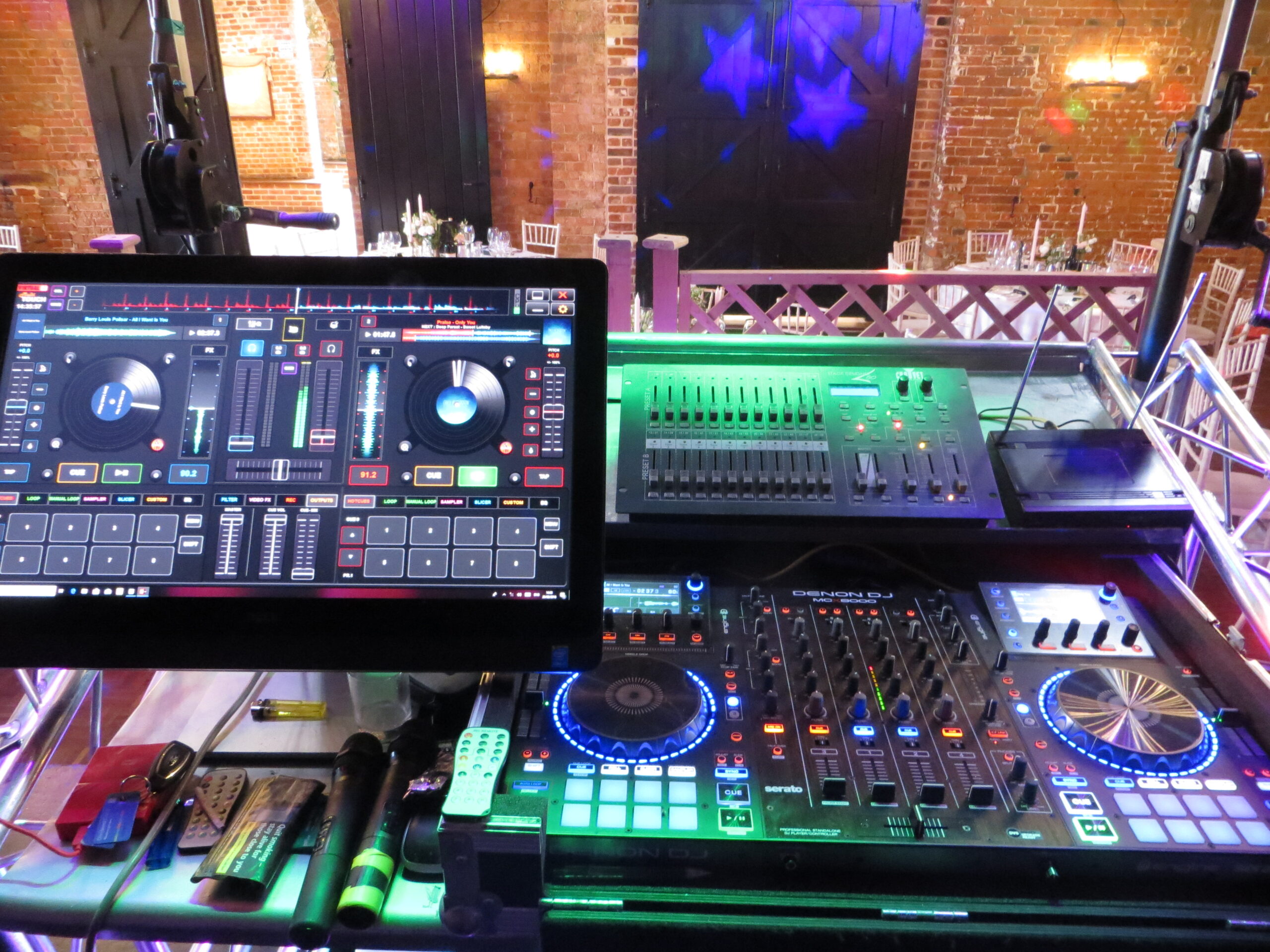
- Annual PAT testing. Every cable, speaker and light carries a current certificate. You can download the certificates from your client portal and send them to your venue.
- Insurance. I hold £10 million public liability cover, and I’m Trading Standards Approved under the Norfolk County Council scheme.
- Sound matched to the room. I adjust the system to your space. So the dance floor feels lively, yet guests can still chat at their tables.
- Spare equipment. I carry a spare mixer, a spare amplifier and extra cables. Then a fault becomes a quick swap, not a disaster.
- Safe cabling. I use heavy-duty leads and professional cable guards, so nobody trips on the dance floor.
Want the full paperwork list? Then read my safe DJ booking checklist.
Power, Space and Venue Rules
Every building has its own quirks. However, a few simple details help any setup run smoothly.
- Power sockets: I need two standard power sockets near the DJ position, ideally on separate circuits.
- Space: allow roughly three metres of wall space for the booth, speakers and lighting.
- Setup time: I need about 60 to 90 minutes before guests arrive, plus time to pack down.
- Access: mention any stairs, narrow corridors or long walks from the car park.
Many venues also use a sound limiter, which cuts the power when music gets too loud. Still, I’ve never left a dance floor silent from a limiter cut. My guide to wedding DJ sound limiters explains how I manage them.
Marquees and Outdoor Events
Large marquees need a high-output system, and I bring one. Even so, they also need a stable, weatherproof power supply and a level floor for the equipment.
Village Halls
Halls often have older wiring and a strict finishing time. As a result, I check the wiring and curfew in advance. See my village hall DJ guide for more tips.
Lighting, Haze and Guest Comfort
I use modern LED lighting, which runs cool and uses little power. Professional lighting comes as standard in my packages, while very large venues receive a bespoke quote.
I also use a venue-friendly haze to show off the light beams. However, some buildings have sensitive smoke alarms, so I always check the alarm type first.
Strobes and fast effects are optional. Plus, my free Sensory-Friendly Disco Mode reduces flashing, gives warnings before effects and creates quieter volume zones. Learn more on my inclusive disco page.
Tim’s tip: Tell me early about any guest with epilepsy or sensory needs. Then I can plan the Sensory-Friendly Disco Mode before the night.
Free Tools for Planning Your Venue
Good preparation makes every setup safer and quicker. That’s why I built these free tools, and they all work on your phone.
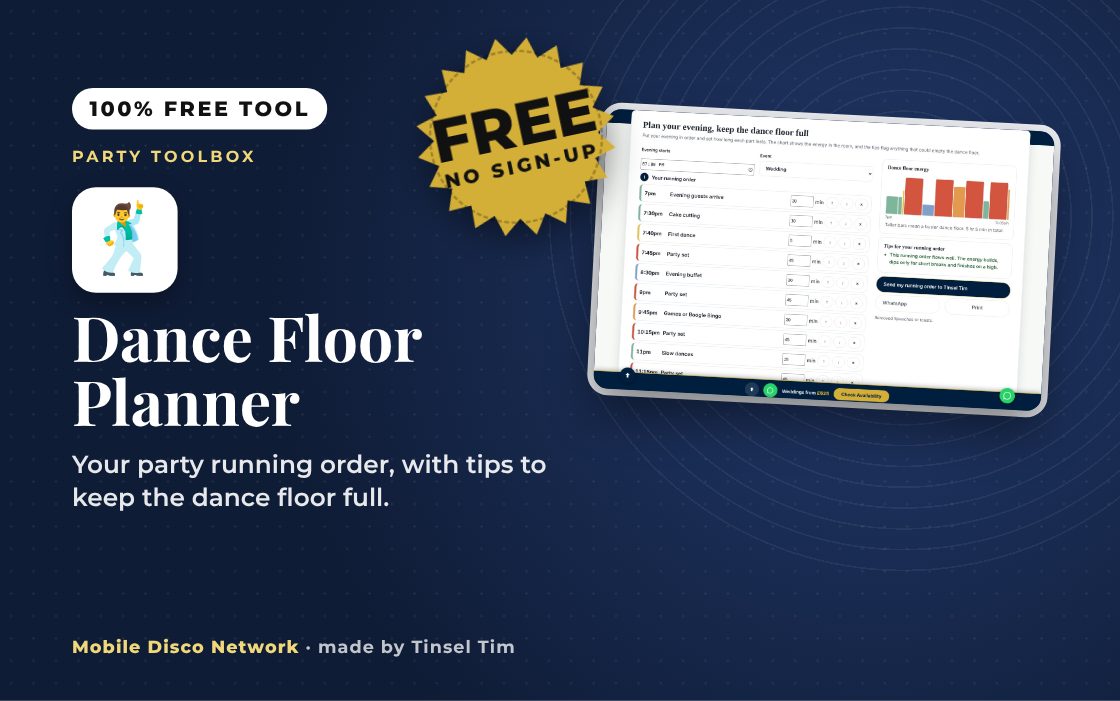 Dance Floor PlannerWork out the right dance floor size for your guests.Use it free →
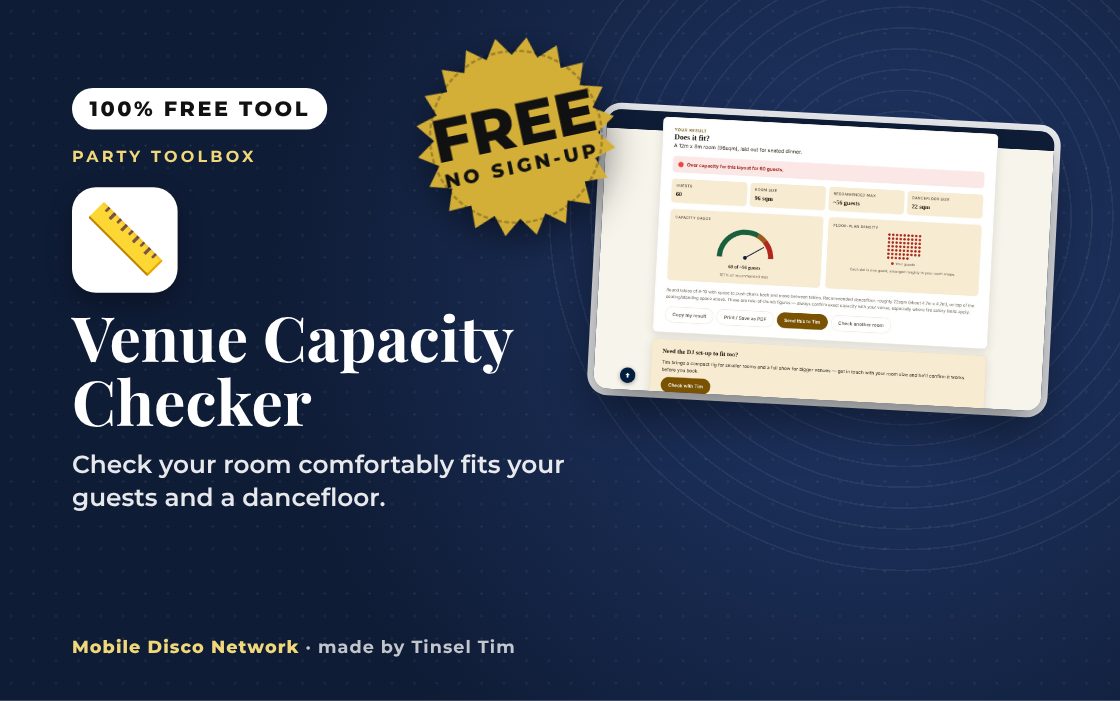 Venue Capacity CheckerCheck your room fits tables, guests and a DJ.Use it free →
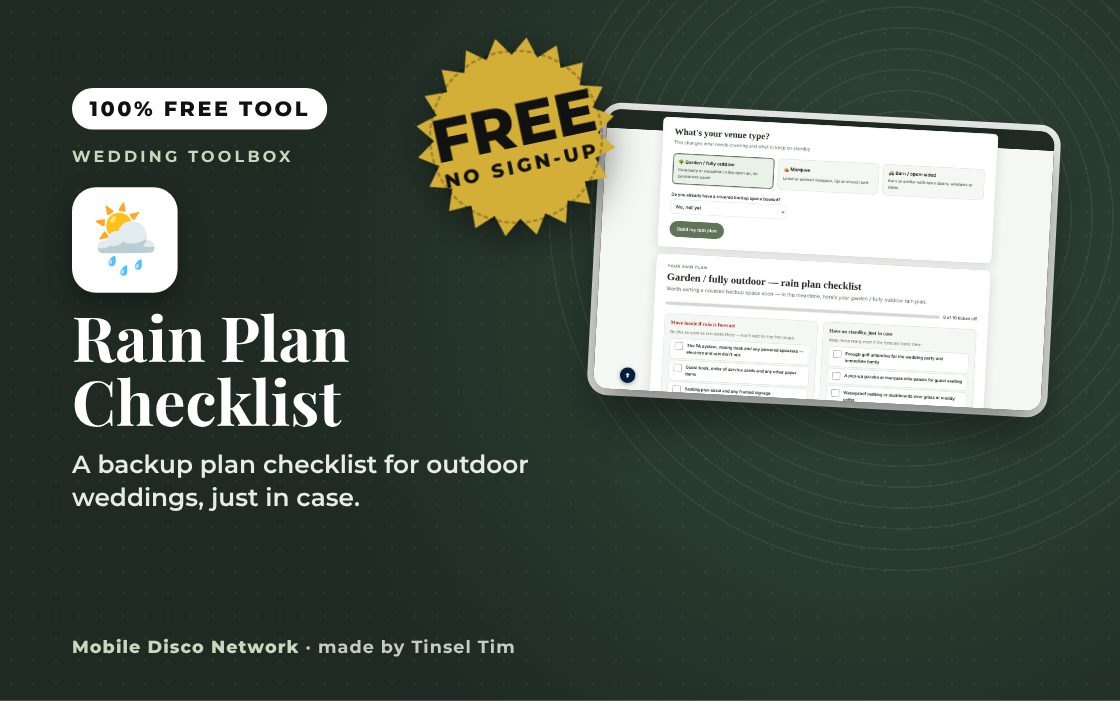 Rain Plan ChecklistA backup plan for marquees and outdoor events.Use it free →
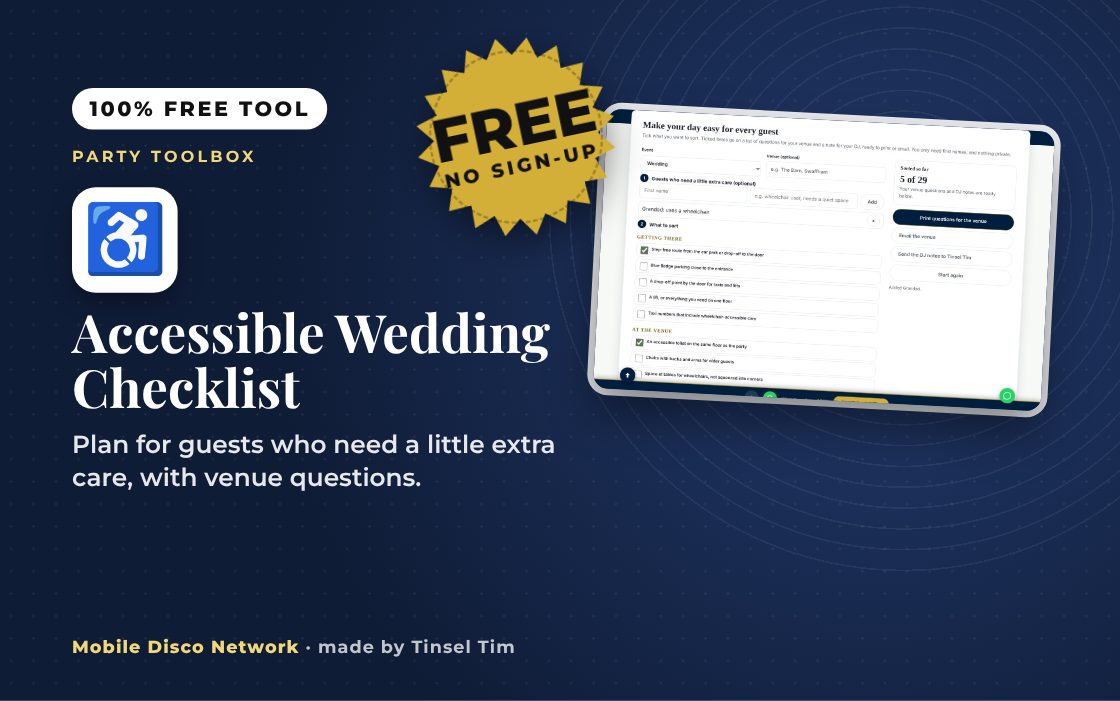 Accessible Wedding ChecklistMake sure every guest can enjoy the celebration.Use it free →
Want more? Then browse my free party toolbox and free wedding toolbox.
DJ Equipment Technical Standards: Your Questions
Do you bring your own cables and extensions?
Yes. First, I find the safest power source at your venue. After that, I lay heavy-duty leads under cable guards.
What happens if something fails during the party?
I carry a spare mixer, amplifier and cables. So I can swap a faulty item quickly and keep the party going.
Can we play our own music during dinner?
Certainly. You can connect your device to my system, and the sound still comes through professional speakers.
Will the haze set off the smoke alarms?
I check your venue’s alarm system before using any haze. If the detectors are sensitive, I simply leave it off.
Does lighting cost extra?
No, professional lighting comes with every package. Discounted extras, such as uplighters, appear in your client portal after booking.
About the author
Tim Daymond (Tinsel Tim) has been a DJ since 1976 and founded Mobile Disco Network in 2013. He plays every booking himself across Norfolk, Suffolk, Cambridgeshire and Lincolnshire.
Book DJ Equipment Built to High Technical Standards
Busy dates fill quickly. So check your date now, or call me to talk through your venue.